In the rugged mountains of Logar Province, just 40 kilometers southeast of Kabul, lies Mes Aynak – one of Afghanistan's most significant ancient Buddhist sites. Often called a "little copper spring" in Pashto, this sprawling archaeological treasure was once a thriving Buddhist monastery complex along the Silk Road. Dating back over 2,000 years to the Kushan Empire, Mes Aynak features massive stupas, intricate Buddha statues, and evidence of early copper mining intertwined with monastic life. But in 2025, this ancient Buddhist heritage site in Afghanistan faces an ongoing threat from one of the world's largest untapped copper deposits below it. In this detailed guide, we'll explore the history of Mes Aynak Buddhist site, its breathtaking discoveries, and the latest developments in the battle to save it.
 |
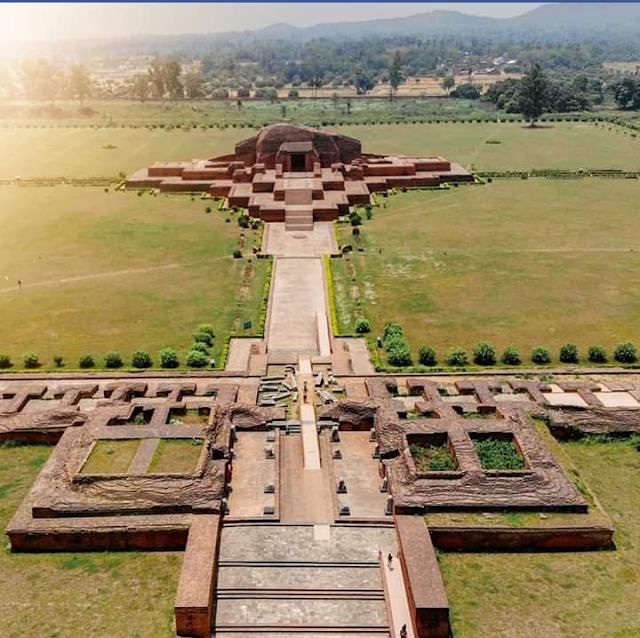
Aerial view of Mes Aynak ancient Buddhist ruins in Afghanistan, showing the vast monastery complex amid mountains.
|
Location and Historical Significance of Mes Aynak Buddhist Site
The Mes Aynak archaeological site covers around 400,000 square meters in a strategic valley, making it a vital hub on the ancient Silk Road. Human activity here dates back to the Bronze Age (around 3000 BCE), with early copper smelting operations. Buddhism arrived in the region under Emperor Ashoka in the 3rd century BCE, but Mes Aynak flourished during the Kushan Empire (1st–3rd centuries CE), when rulers like Kanishka promoted Buddhism across Central Asia and India.
What sets Mes Aynak ancient monastery apart is its unique combination of spirituality and industry. Buddhist monks lived alongside miners, with monasteries built directly over copper workings. This "monastic-mining city" model highlights how Buddhism adapted to economic realities, blending Gandharan art influences from Greek, Persian, and Indian cultures.
 |
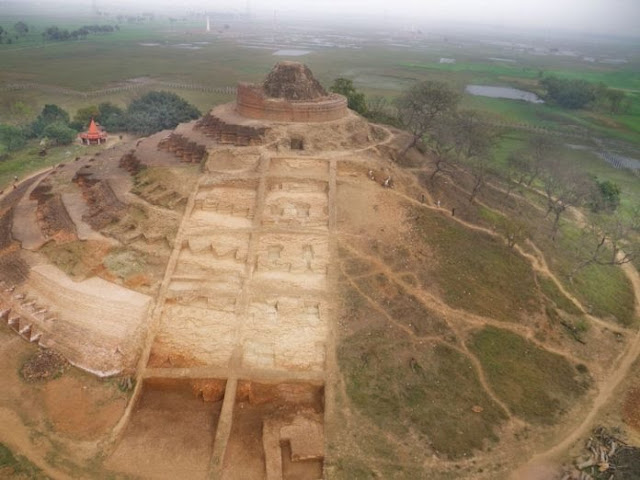
Overview of Mes Aynak Buddhist site excavations, revealing fortified. monasteries and stupas in Logar Province, Afghanistan. |
Architectural Marvels: Stupas, Monasteries, and Fortifications at Mes Aynak
From the 3rd to 8th centuries CE, Mes Aynak hosted at least seven large fortified monastery complexes, complete with chapels, courtyards, monks' cells, and over 100 stupas. Built with schist stone and clay, these structures included watchtowers and high walls for protection during turbulent times.
Key areas like Tepe Kafiriat feature grand stupa courtyards with decorative arches and pilasters. The site also reveals workshops, a coin mint, and even a Zoroastrian fire temple, underscoring its multicultural role before the arrival of Islam.
Incredible Discoveries: Buddha Statues and Artifacts from Mes Aynak Excavations.
Excavations since 2009 have uncovered over 600 Buddha statues in clay, stucco, and schist – many with original vibrant paints in red, blue, and gold. Highlights include life-size colossal Buddhas, gilded heads, rare pre-enlightenment depictions of Prince Siddhartha, wall frescoes, birch bark manuscripts (including Diamond Sutra fragments), Kushan coins, and gold jewelry.
In 2025 updates, over 1,430 ancient artifacts from Mes Aynak excavations were transferred to Afghanistan's archaeology department for preservation. Deeper digs reveal Bronze Age tools, confirming 5,000 years of copper mining history. Only 10-20% of the site is excavated, promising more insights into Gandharan Buddhism.
Mes Aynak and the Silk Road: A Crossroads of Cultures
As a key Silk Road Buddhist heritage spot, Mes Aynak facilitated trade in copper, lapis lazuli, and ideas. Its art reflects syncretic styles – Hellenistic robes on Buddhas, Persian motifs – making it a pinnacle of Gandharan sculpture.
The Ongoing Threat: Copper Mining vs. Preservation in 2025
Beneath Mes Aynak lies the second-largest copper deposit globally. A 2007 contract with China's MCC (extended 15 years in 2025) aims for extraction, but plans shifted to underground mining to minimize damage. Road construction began in 2024, with practical work accelerating in 2025. Conservation efforts by ALIPH and Aga Khan Trust continue, protecting structures and relocating artifacts.
Despite promises to preserve the site, experts worry about environmental impacts and full excavation needs (decades more). The conflict balances economic gains for Afghanistan with saving this irreplaceable ancient Buddhist site.
Why Saving Mes Aynak Matters in 2025
Mes Aynak Buddhist site represents Afghanistan's pre-Islamic diversity and Buddhist golden age. In a time of challenges, preserving it honors global heritage. Follow UNESCO and Afghan updates for the latest on Mes Aynak excavations and mining.
What’s your view on balancing heritage and development at sites like Mes Aynak? Comment below!




Comments
Post a Comment