Posts

The Holy Devnimori Relics of Lord Buddha: A Historic International Exposition in Sri Lanka (2026)

Image
The Holy Devnimori Relics of Lord Buddha: A Historic International Exposition in Sri Lanka (2026)   Introduction:  A Sacred Journey Across Borders In February 2026, a profound moment in global Buddhist heritage unfolded as the Holy Devnimori Relics of Lord Buddha embarked on their maiden international exposition. Transported from Vadodara, Gujarat, to Colombo, Sri Lanka, these sacred relics symbolize India's role as the birthplace of Buddhism and its commitment to sharing this ancient spiritual legacy with the world. The exposition, held at the iconic Gangaramaya Temple in Colombo from February 4 to 10, 2026 (with public veneration starting February 5), marks a significant step in cultural diplomacy. It follows the vision shared by Prime Minister Narendra Modi during his 2025 visit to Sri Lanka, strengthening centuries-old ties between the two nations. The relics returned to India on February 11, 2026, after drawing thousands of devotees, scholars, and pilgrims. This event...

Thotlakonda Buddhist Site: Ancient History, Monsoon Impact & Latest Developments

Image
Thotlakonda Buddhist Site: Ancient History, Monsoon Impact & Latest Developments [This article was originally published in 2020 and fully updated in January 2026 for accuracy and completeness.] Introduction Nestled on a scenic hilltop overlooking the Bay of Bengal, the Thotlakonda Buddhist Site in Andhra Pradesh is a remarkable testament to India’s early Buddhist heritage. With origins dating back almost two thousand years, this ancient monastic complex provides valuable insights into the spiritual, cultural, and maritime networks that shaped the region. While the site has survived centuries of natural wear, recent monsoon events and preservation challenges highlight the delicate balance between heritage conservation and environmental forces. This article presents a comprehensive overview of Thotlakonda: its historical significance, architectural features, the effects of heavy rainfall, ongoing restoration efforts, and recent developments that underscore its relevance today. H...

Takht-e Rostam Stupa: Afghanistan's Unique Rock-Cut Buddhist Masterpiece – Complete 2026 Guide

Image
Takht-e Rostam Stupa: Afghanistan's Unique Rock-Cut Buddhist Masterpiece – Complete 2026 Guide [Originally published on April 2020 and updated on January 20, 2026 with new information, 2026 travel guide, and latest preservation updates."] Afghanistan's ancient history is filled with layers of civilizations, and one of the most remarkable surviving examples of its Buddhist heritage is the Takht-e Rostam stupa and monastery complex in Samangan Province. This extraordinary rock-cut site, often called the "sunken stupa," stands as a testament to the spread of Buddhism along the Silk Road and remains one of the best-preserved pre-Islamic monuments in the country. Unlike many sites damaged or destroyed over centuries of conflict, Takht-e Rostam has endured remarkably well, thanks to its ingenious design carved directly into the bedrock. Location and How to Visit in 2026 The complex is located about 2-3 km southwest of Aybak (also known as Haibak), the capital of S...

Buddhist Archaeological Sites: Hidden Excavations That Reveal the Early Spread of Buddhism

Image
  Introduction Buddhist archaeological sites offer invaluable insight into the early history of Buddhism and its peaceful spread across Asia. From rock-cut caves and monasteries to ancient stupas and stone reliefs, these excavations preserve physical evidence of the Buddha’s teachings, monastic life , and artistic traditions that flourished over centuries. Many of these sites remained hidden for centuries before being rediscovered through systematic archaeological excavations. This article explores the significance of Buddhist archaeological sites, major excavation centers, and how these discoveries help us understand early Buddhism. What Are Buddhist Archaeological Sites? Buddhist archaeological sites are locations where physical remains related to Buddhism have been discovered through excavation. These include: • Monasteries ( Viharas ) • Stupas and relic shrines • Rock-cut caves • Sculptures and inscriptions • Ancient manuscripts and seals Such sites date mainly from th...

Mes Aynak: Afghanistan's Ancient Buddhist Site Threatened by Copper Mining (2025 Updates)

Image
  In the rugged mountains of Logar Province, just 40 kilometers southeast of Kabul, lies Mes Aynak – one of Afghanistan's most significant ancient Buddhist sites. Often called a "little copper spring" in Pashto, this sprawling archaeological treasure was once a thriving Buddhist monastery complex along the Silk Road. Dating back over 2,000 years to the Kushan Empire, Mes Aynak features massive stupas, intricate Buddha statues, and evidence of early copper mining intertwined with monastic life. But in 2025, this ancient Buddhist heritage site in Afghanistan faces an ongoing threat from one of the world's largest untapped copper deposits below it. In this detailed guide, we'll explore the history of Mes Aynak Buddhist site, its breathtaking discoveries, and the latest developments in the battle to save it. Aerial view of Mes Aynak ancient Buddhist ruins in Afghanistan, showing the vast monastery complex amid mountains. Location and Historical Significance of ...

1300-Year-Old Gold and Silver Relics Unearthed Beneath Thailand's Oldest Reclining Buddha Statue in 2025

Image
  In April 2025, Thailand's Fine Arts Department announced a significant archaeological discovery at Wat Dhammachak Semaram (also spelled Wat Thammachak Semaram) in Sung Noen District, Nakhon Ratchasima Province, northeastern Thailand. During routine conservation work, workers uncovered a collection of well-preserved gold, silver, and bronze artifacts buried beneath the base of the temple's colossal sandstone reclining Buddha statue. This statue, measuring over 13 meters (approximately 43 feet) in length, is widely regarded as Thailand's oldest and longest reclining Buddha sculpture, dating back to the 7th century CE during the height of the Dvaravati period (6th–11th centuries CE). The Discovery Process and Initial Findings The artifacts came to light incidentally during efforts to install an underground drainage system aimed at reducing moisture accumulation around the statue's foundation. On April 21, 2025, at a depth of about 1.3 meters, workers encountered a damage...

Popular posts from this blog

conversation between buddha and ananda.

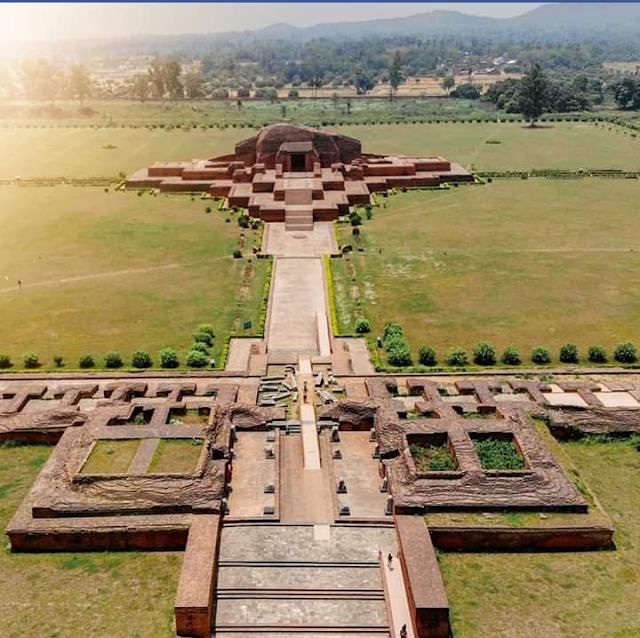
Vikramshila university destroyed by an Islamic invader

cultural sites damaged by ISIS

Kusinagar: Where Buddha Slipped his Earthly Bonds.

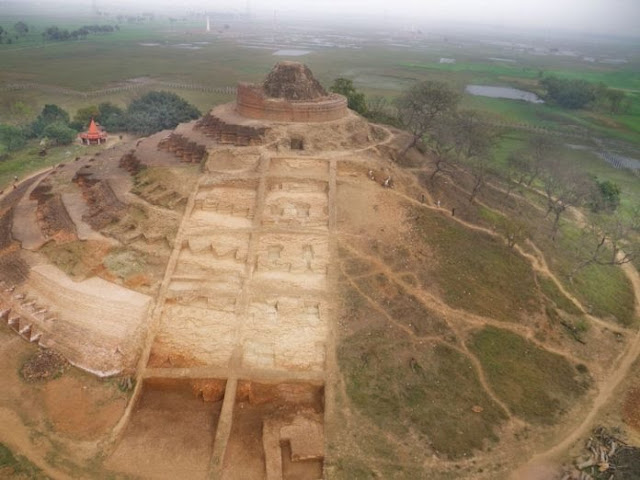
Kesaria stupa: world's largest buddhist stupa.