Vaishya Tekri Ujjain: The Mysterious Ancient Stupa That May Be Larger Than Sanchi

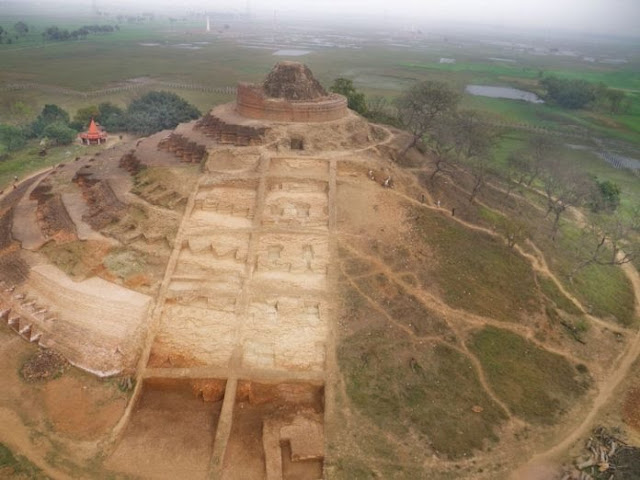
For nearly nine decades, a massive archaeological mound near Ujjain has remained only partially understood. Known as Vaishya Tekri , the site was excavated in 1938–39, when archaeologists identified the remains of an unusually large monument believed to be a Buddhist stupa. Now, after almost 90 years, the site has returned to the archaeological spotlight. The Archaeological Survey of India (ASI) and the Madhya Pradesh government are pursuing renewed investigation and excavation at Vaishya Tekri. The most striking claim comes from the old excavation record: the monument was estimated to have a base of around 350 feet in diameter and a height of at least 100 feet . For comparison, the present Great Stupa at Sanchi is about 54 feet high. However, whether Vaishya Tekri was actually larger than Sanchi—and whether it was specifically built under Emperor Ashoka—still requires scientific verification. What Is Vaishya Tekri? Vaishya Tekri is an ancient archaeological mound at Undasa in Ujj...



Comments
Post a Comment