Posts

Showing posts from August, 2020

Phanigiri Buddhist Site: The Forgotten Buddhist Heritage of Telangana

Image
India is home to hundreds of Buddhist monuments, but only a handful receive widespread attention. While places such as Sanchi, Nalanda, Bodh Gaya , and Amaravati are well known, the ancient Buddhist settlement of Phanigiri remains one of the country's most remarkable yet underrated archaeological treasures. Situated in the Suryapet district of Telangana, this hilltop complex preserves the remains of a flourishing Buddhist establishment that existed for several centuries and played an important role in the spread of Buddhism across the Deccan. Excavations have revealed impressive stupas, monasteries, prayer halls, inscriptions, sculptures, and Buddhist relics, providing valuable evidence of religious, educational, and artistic activities in southern India. Today, Phanigiri stands as a silent witness to a vibrant Buddhist civilization that once attracted monks, pilgrims, merchants, and patrons from different regions. This article explores the history, archaeology, architecture, and ...

Bharhut stupa: Where stones spoke of buddha's past lives.

Image
Bharhut stupa : where stones spoke of  Buddha's past lives.     Bharhut stupa was built   by Ashoka(circa250 BCE) initially and was later improvised by the Sungas. The railings of the stupa and its one surviving gates are at the Indian museum in Kolkata. This is the earliest stupa railing to have survived. The most famous donor for bharhut stupa was king Dhanabhuti .The sculpture of bharhut represent some of the earliest example of Indian and Buddhist art. Buddhism continued to survive in bharhut until 12th century. A small Buddhist temple was enlarged around 1100AD and a new statue of Buddha was installed. In the bharhut sculptures there is no traces of any images worship , the only objects of reverence being stupa, wheel , Bodhi trees, buddha Padas and the symbol of Tri-ratna .               Description of stupa               Position of bharhut—     Bharhut also called barda...

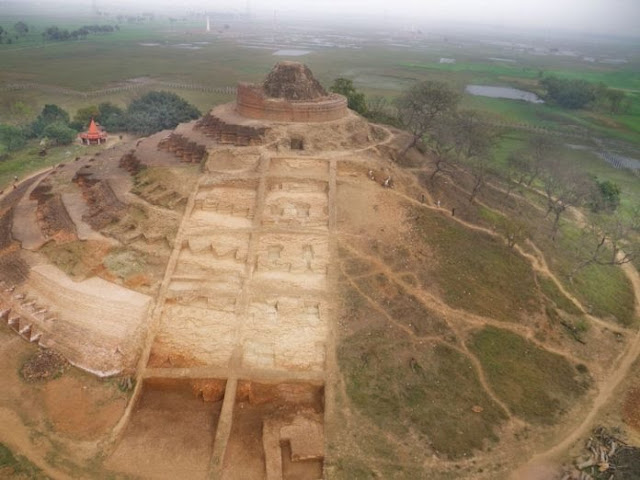
Kesaria stupa: world's largest buddhist stupa.

Image
 The Kesaria stupa : Built to honor Buddha's final days– Kesaria stupa According to some scholars, this is the place where prince Gautama cut his hair to renounce the world, after leaving his palace. Other scholars believe that actual place was nearer from kapilavastu.                          It is believed that the current structure was built somewhere between 200 AD and 750 AD to honor the location where buddha spent his begging bowl. The structure is a fine example of Buddhist architecture. In the time of Buddha, it was known as kessaputta. Lord buddha said to have made several announcements from here, which later formed part of the Jatka tales . Huen tsang mentions having seen the grand stupa in kia-shi-po-lo (kesariya) but it was deserted and vegetation had overgrown. It is believed that lord buddha spent a night at this place before his nirvana and have his begging-bowl to the lichhivis . Lichhivis are all...

Popular posts from this blog

conversation between buddha and ananda.

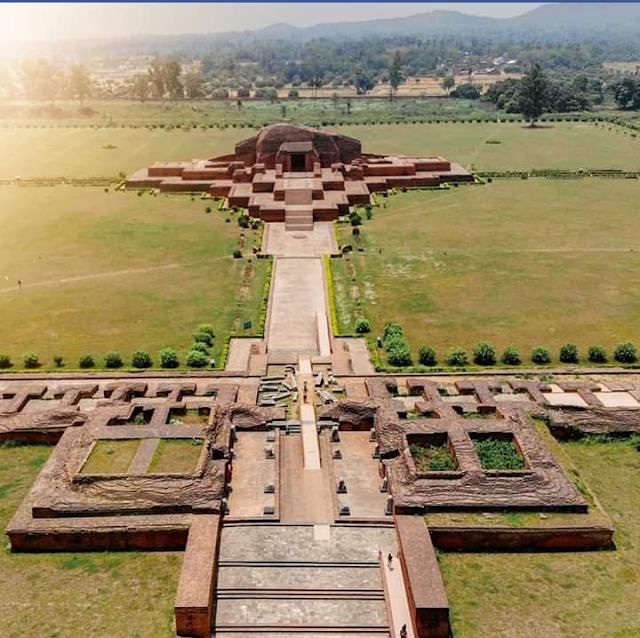
Vikramshila university destroyed by an Islamic invader

cultural sites damaged by ISIS

Kushinagar: The Sacred Site of Buddha’s Mahaparinirvana and Its Deep Historical Legacy

Kesaria stupa: world's largest buddhist stupa.