Moghalmari Buddhist mahavihara: An ancient buddhist monestry in west bengal
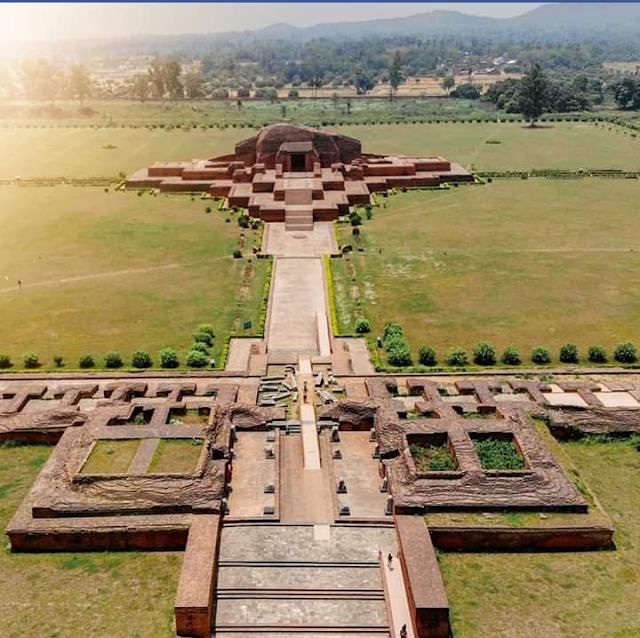
The Moghalmari Buddhist Mahavihara, located in west bengal's Paschim Medinipur district, is a significant archeological site from the early medieval period (6th-7th century CE). This ancient Buddhist monastery,dating to the post-Gupta and pre-Pala eras, is often to renowned sites like Nalanda Mahavihara in Bihar and Udaigiri and Lalitgiri in Odisha. As the largest and oldest excavated Buddhist site in West Bengal, Moghalmari offers a fascinating glimps into India's Buddhist heritage. This article explores its history, excavation details, key findings, and why it's a must-visitfor history enthusiasts.
 |
| Main gate |
 |
| Excavation site |
Historical background of buddhist mahavihara
Moghalmari, also known as MOGHALMARI BUDDHIST MONASTERY, thrived during the 6th-7th century CE, a period of significant Buddhist influence in India. The Chinese traveler XUANZANG (HuenTsang), who visted India in 7th century, noted the existence of 'ten monesteries' in the region of TAMRALIPTA (morden-day Tamluk, Purba Medinipur district).While Xuanzang didn't specify names, historians believe Moghalmari was among these monastic centers.
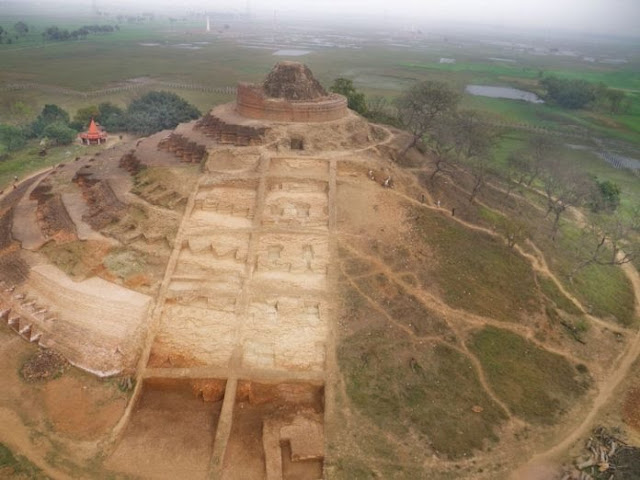
Located near Dantan, the site features a prominent mound called PATHCALA OF SASHISENA,now in ruins.This oblong structure, measuring approximately 120 feet (east-west) by 110 feet (north-south), contains scattered large bricks, some repurposed by locals over time. The ruins extend along a half-mile stretch from SHOKHISENA'S GADA to the remnants of VIKRAMAJIT'S PALACE, indicating the monestry's vast historical footprint.
EXCAVATION OF MOGHALMARI BUDDHIST MONASTRY
Excavation at Moghalmari began in 2002-2003, led by Professor Ashoka Dutta of kolkata University. Covering approximately 4300 square yards, the siteis the largest archaeological excavationin west Bengal. Conducted in seven phases from 2003 to 2012, the digs uncovered two primary monesteries: Mugalayikavihara and Yajnapindikamaha Vihara, both dated to the post-Gupta period.
Key findings include six inscribed seals bearing deer and Dharmachakra symbols, confirming the site's Buddhist identity. These discoveries have positioned Moghalmari as a critical site for studying early medieval Buddhist aechitecture and culture.
MAJOR ARCHAEOLOGICAL DISCOVERIES AT MOGHALMARI
The excavation at moghalmari have unearthed a wealth of artifacts, shedding light on the monastry's historical and cultural significance:
MONASTIC STRUCTURE: Remains of a large Buddhist monestry, multiple stupas, and stucco-plastered walls with intricate decorations.
SCULPTURES AND IDOLS: Bronze idols of Buddha, Bodhisattvas, and Buddhist goddesses; a 24cm*14cm Buddha image; two stucco heads;a stone female deity; and sculptures with proto-Bengali script.
TERACOTTA ARTIFACTS: seventeen votive terracota tablets categorized into four types:
1. Buddha in Padmasana, flaked by four standing Bodhisattvas. and miniature meditating Buddhas.
2. Buddha in Bhadrasana (European style), with two. Bodhisattvas, framed in odissi Nagara-styles temple with an. Amalaka top, inscribed with the Buddhist creed " ye. dharma hetu prabhava..." and miniature stupas.
3. A large central stupa surrounded by hundreds of miniature. stupas.
4. Blank tablets without inscriptions.
- Other Antiquities: Teracotta lamps, stucco fragments, sprinklers, iron nails, footed bowls, hopscotch, spouted bowls, decocative bricks, pottery, mixed metal coins inscribed with King Samachardeva's name, a gold pendent, a crown fragment, and a pre-kushana copper coin.
- Script and inscriptions: Post-Gupta Brahmi script on seals and proto-bengali script on sculptures, indicating early medieval repairs.
The stucco decoration, reminiscent of the Gupta period, and decorative bricks draw parallels to sites like Vikramshila, Nalanda, Paharpur, and Mainamati.
CULTURAL AND HISTORICAL SIGNIFICANCE
Moghalmari's stucco art and decorative elements highlight the arrtistic excellence of the Gupta period, with Professor Dutta dating the early structures to the 6th century CE based on paleography and art styles.
The sites underscores West Bengal's role in india's Buddhist heritage,complementing the legacy of sites like Nalanda and Vikramshila.
Local villagers have contributed to preservation efforts, reporting artifacts that are now displayed in museums. These findings affirs Moghalmari's role as a as a major Buddhist centre, with its influence extending into the latemedieval period through repairs and reconstructions.
CONCLUSION: preserving Moghalmari's Legacy
The Moghalmari Buddhist Mahavihara is a testment to india's rich Buddhist heritage, offering insights into early medieval monastic life.Its ongoing preservation ensures it remains a vital link to the past, attracting scholars and tourist alike. By visting Moghalmari, you contribute to safeguarding West Bengal's hidden archaeological gems.




wow, This is a great post. I was really invested in this post. Maitreya Buddha is my fav
ReplyDeleteNice post
ReplyDeleteNice post
ReplyDeleteGood article keep it up
ReplyDelete