Introduction
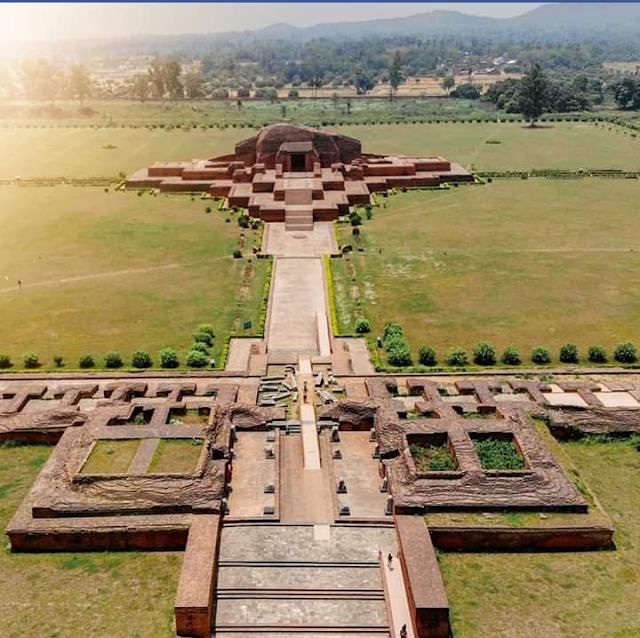
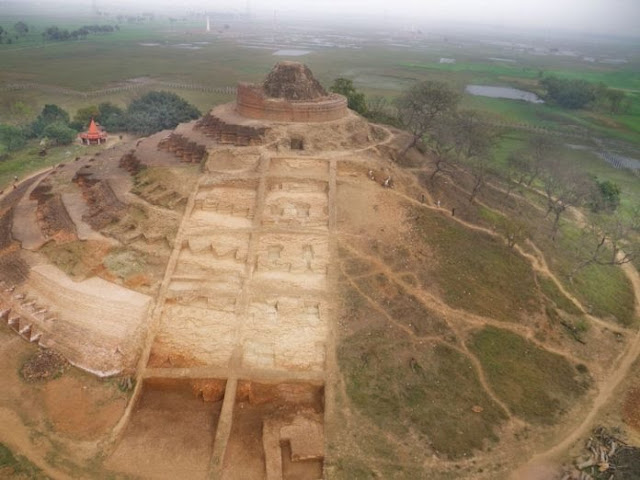
Buddhist archaeological sites offer invaluable insight into the early history of Buddhism and its peaceful spread across Asia. From rock-cut caves and monasteries to ancient stupas and stone reliefs, these excavations preserve physical evidence of the Buddha’s teachings, monastic life, and artistic traditions that flourished over centuries. Many of these sites remained hidden for centuries before being rediscovered through systematic archaeological excavations.
This article explores the significance of Buddhist archaeological sites, major excavation centers, and how these discoveries help us understand early Buddhism.
What Are Buddhist Archaeological Sites?
Buddhist archaeological sites are locations where physical remains related to Buddhism have been discovered through excavation. These include:
• Monasteries (Viharas)
• Stupas and relic shrines
• Rock-cut caves
• Sculptures and inscriptions
• Ancient manuscripts and seals
Such sites date mainly from the 3rd century BCE to the 8th century CE, covering the Mauryan, Kushan, Gupta, and post-Gupta periods.
Importance of Archaeological Excavations in Buddhism
Archaeological excavations play a crucial role in reconstructing Buddhist history. They help scholars:
• Verify historical texts and travel accounts
• Understand monastic architecture and daily life
• Trace the spread of Buddhism along trade routes like the Silk Road
• Study regional art styles such as Gandhara and Mathura
Excavations also confirm that Buddhism spread not by force, but through monastic networks, education, and cultural exchange.
Major Buddhist Archaeological Excavation Sites
1. Lumbini (Nepal)
Lumbini, the birthplace of Siddhartha Gautama, is one of the most important Buddhist archaeological sites. Excavations have revealed ancient brick structures beneath the Maya Devi Temple, confirming continuous worship since at least the 3rd century BCE, during Emperor Ashoka’s reign.
2. Bodh Gaya (India)
Bodh Gaya is where the Buddha attained enlightenment. Archaeological studies around the Mahabodhi Temple have uncovered older shrine foundations, votive stupas, and inscriptions from multiple periods, proving its long-standing religious significance.
3. Sarnath (India)
Sarnath, where the Buddha delivered his first sermon, has yielded remains of monasteries, stupas, and the famous Ashokan Lion Capital. Excavations reveal a thriving monastic university active for centuries.
4. Gandhara Region (Pakistan–Afghanistan)
The Gandhara region is renowned for its unique Buddhist art influenced by Greco-Roman styles. Excavations at sites like Taxila, Takht-i-Bahi, and Jamal Garhi uncovered stone sculptures depicting events from the Buddha’s life, including his birth, enlightenment, and parinirvana.
5. Kara Tepe (Uzbekistan)
Kara Tepe, near Termez, is a remarkable Buddhist archaeological complex dating to the Kushan period. Excavations revealed cave monasteries, temples, wall paintings, and inscriptions in Brahmi and Bactrian, highlighting Buddhism’s presence in Central Asia.
Archaeological Evidence of the Buddha’s Life
Although the Buddha himself was not portrayed in early art, excavations have revealed symbolic representations such as:
• Lotus flowers (birth)
• Bodhi tree (enlightenment)
• Dharmachakra (first sermon)
• Stupa (parinirvana)
Later excavations, especially in Gandhara, introduced human representations of the Buddha carved in stone.
Decline and Preservation of Buddhist Sites
Many Buddhist sites declined after the 6th century CE due to changing political and religious landscapes. However, modern archaeological efforts and UNESCO protection have helped preserve these sites as global heritage monuments.
Preservation not only protects history but also promotes cultural tourism and academic research.
Why Buddhist Archaeology Still Matters Today
Buddhist archaeological sites remind us of a civilization rooted in peace, wisdom, and compassion. They connect modern society with ancient values and provide material proof of Buddhism’s historical journey across Asia.
For historians, archaeologists, and spiritual seekers alike, these excavations continue to offer new discoveries and deeper understanding. Conclusion
Buddhist archaeological sites are silent witnesses to one of the world’s greatest spiritual traditions. Through careful excavation and research, these ancient remains allow us to rediscover the early spread of Buddhism and its lasting impact on Asian culture and history.
As ongoing excavations continue to reveal new findings, Buddhist archaeology remains a vital field for understanding humanity’s shared heritage.




Comments
Post a Comment